.svg)
Pencil whipping is signing off on an inspection or work order without performing or verifying it, and in a hospital it can hide real life-safety risks behind a clean record. Learn why it happens, what it puts at risk, and how automated testing and continuous monitoring remove the manual sign-off step.
Article
What Is Pencil Whipping? Why It Happens in Facility Inspections and How to Stop It

Christian de Abreu
Healthcare
September 29, 2026



Key Takeaways
- Pencil whipping means marking an inspection or work order complete without actually performing or verifying it.
- Workload pressure, time constraints, outdated systems, and compliance-focused metrics can contribute to pencil whipping.
- In healthcare facilities, falsified records can hide serious life-safety risks and create compliance, legal, and patient-safety concerns.
- Prevention starts with better verification, realistic workloads, spot checks, and incentives that prioritize verified work over completed paperwork.
- Automated testing and continuous monitoring can generate inspection records directly from the check, reducing reliance on manual sign-offs.
Introduction
Pencil whipping is the practice of signing off on an inspection, test, or work order without actually performing or verifying the task it claims to document. The signature says the check happened. The equipment behind it may never have been touched.
In a hospital or healthcare facility, this turns life safety and Environment of Care records into a false record of compliance, one that can pass daily scrutiny but collapse the moment a surveyor, fire marshal, or forensic investigator pulls the thread.
What Pencil Whipping Means?
Pencil whipping is the act of marking a task, inspection, or work order as complete, on paper or in a digital log, without performing the underlying check. Wiktionary and industry sources including Upkeep and eMaint define the term consistently across every reference: it is signing off on something that was never verified. The record looks complete. The work behind it may not exist.
The phrase has roots in military and auditor culture, where it described officers or inspectors "signing" compliance rather than actually inspecting. It sits alongside a close nautical relative, "gundeck," which describes an identical practice at sea: filling in a log entry for an inspection or reading that was never taken, then filing it as if it had happened. Both terms describe the same underlying failure. Paperwork stands in for reality.
In general facility and maintenance settings, the tasks most commonly pencil whipped are the routine, repetitive ones. Scheduled equipment checks, safety inspections, inventory counts, and training certifications top the list, according to CMMS industry sources. These are the checks nobody scrutinizes closely, until something fails and someone asks to see the record.
In a hospital or healthcare facility, the equivalent high-risk items look different but work the same way. Environment of Care rounds, emergency lighting and exit sign tests, fire extinguisher checks, fire door inspections, and other recurring, compliance-critical tasks rarely get a second look, until a surveyor asks to see two years of logs at once and starts comparing entries side by side.
Searches for "pencil whipping meaning," "what does pencil whip mean," and "falsified inspection records" all describe this same core act. The word can function as a noun ("that log was a pencil whip") or a verb ("someone pencil whipped the extinguisher check"), but the underlying meaning does not change.
Why Pencil Whipping Happens?
Pencil whipping is rarely a single bad actor falsifying records for no reason. Across maintenance and healthcare industry sources, the root causes repeat: unrealistic workload, time pressure, alert or compliance fatigue, clunky paper or legacy documentation systems, and a culture that measures "percentage of work orders closed" instead of verified quality.
A facilities team responsible for hundreds of life safety devices, dozens of pressure-controlled rooms, and a full preventive maintenance calendar cannot always reach every scheduled check on the exact day it is due.
When an urgent patient-care work order, such as a broken bed rail or a leaking pipe in an occupied room, competes for the same technician's time as a routine monthly extinguisher check, the urgent task usually wins the hour. The routine check often still gets logged as done, to keep the compliance dashboard clean and the backlog from showing.
Paper logs and clipboard-based systems make this easier to do without anyone noticing. A binder does not know whether the person signing it was standing in front of the device when they wrote the entry. A digital form filled out from a desk, hours or days after the fact, looks identical on the page to one filled out at the point of inspection.
Leadership incentive structures add another layer of pressure. When a facilities director is measured on "100% of PM completed" rather than "100% of PM verified," staff learn quickly that signing is faster than checking, and that the metric rewards the signature, not the work. That pressure does not require dishonesty as a personality trait. It only requires a system where signing off is easier and faster than doing the task.
In hospitals specifically, this plays out as a recurring pattern rather than a one-time lapse. A backlog builds during a busy week, staff fall further behind on routine, non-urgent checks, and instead of flagging the gap to a supervisor, someone retroactively fills in the missed entries to clear the backlog before anyone notices it was ever open.
What Pencil Whipping Puts at Risk?
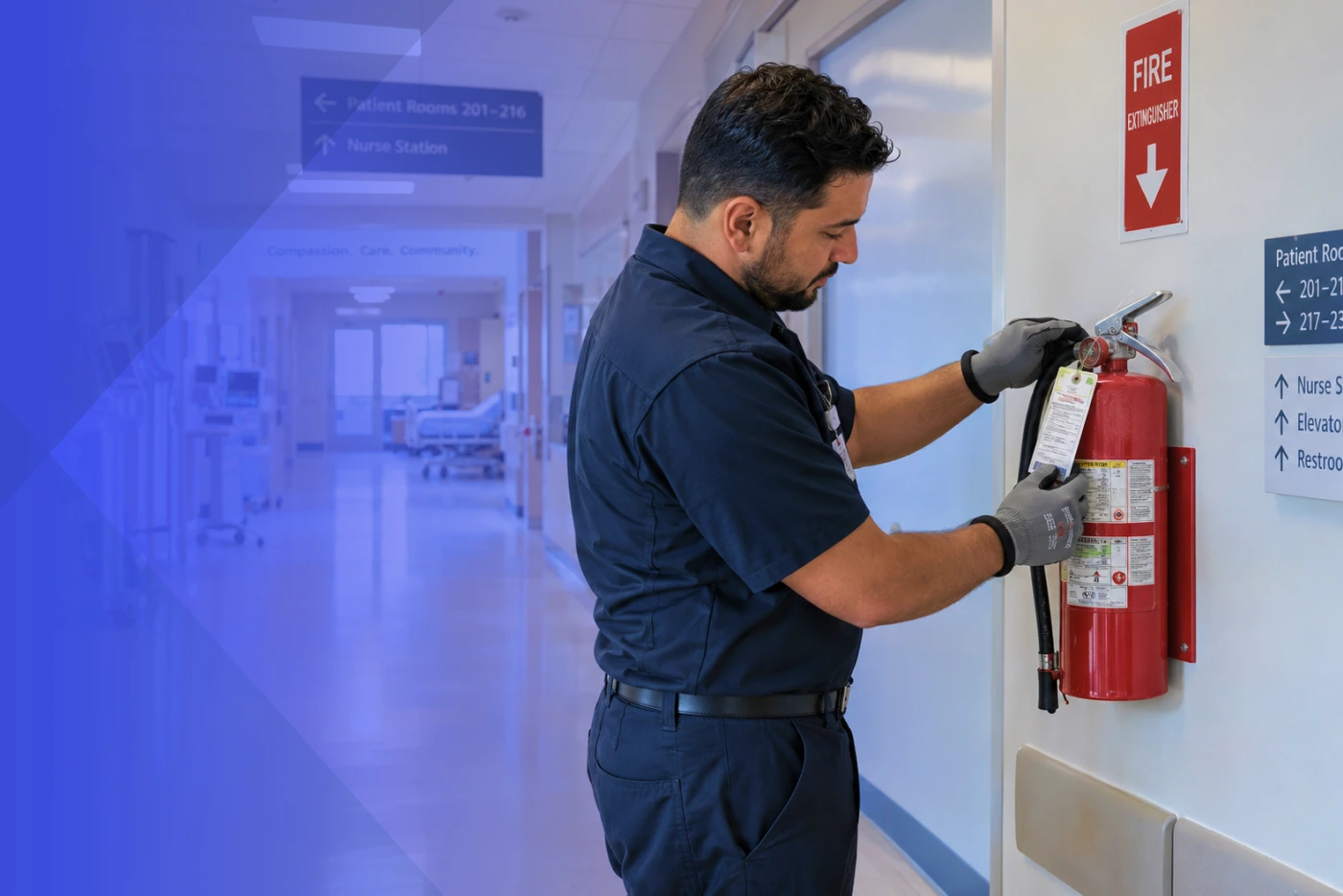
Pencil whipping is not a paperwork technicality. It hides real equipment failures and unaddressed hazards behind a record that looks clean. A fire extinguisher marked "inspected" that was never actually checked for pressure, weight, obstruction, or tampering may fail the exact moment it is needed, with no warning anywhere in the record.
In a healthcare setting, the stakes run higher than in general manufacturing or commercial facilities work. A pencil-whipped emergency lighting test, fire door inspection, or pressure-room reading is not just an internal maintenance record.
It is exactly the type of document a Joint Commission, CMS, or DNV surveyor is trained to pull and scrutinize during a life safety or Environment of Care review. It is also the kind of record that can get subpoenaed after an incident.
Surveyors and auditors are generally not looking for a single bad entry. Industry practice describes them looking for patterns that suggest a record was filled out after the fact rather than at the point of inspection.
Common red flags include identical completion times across multiple months, entries logged suspiciously fast for the task described, or logs that show no natural variation over an extended stretch of time. A record that reads as "too perfect" tends to draw more scrutiny, not less.
The consequences described consistently across industry sources include a higher risk of equipment failure or an actual patient safety incident, disciplinary action or termination for the person who signed off, and legal or insurance liability if a false sign-off is later connected to real harm.
A pencil-whipped record does not just fail an internal audit. It can become evidence in litigation or an insurance dispute once an incident forces someone to go back and check whether the paperwork was real.
There is a quieter cost leadership often overlooks. Capital planning, budget requests, and risk assessments get built on top of "all clear" compliance data reported up the chain.
If that underlying data is falsified, decisions about which units get funded for HVAC repairs, which extinguishers get replaced, and which rooms get flagged for correction are built on bad information. The gap usually only becomes visible after something fails or a surveyor finds it first.
This pattern is not limited to any single device category. The same distorted picture can spread across fire safety, environmental monitoring, and equipment maintenance records alike, compounding the risk each time leadership relies on that data to prioritize corrective work.
The Modern Alternative for Pencil Whipping
Culture and process fixes come first. Removing incentive structures that reward volume over accuracy is a starting point. Running random spot checks and second-level verification adds another layer of assurance.
Giving staff a safe way to report a missed task, instead of a reason to fabricate that it was done, removes the pressure to falsify a record. None of this requires new equipment, only different management practices.
The more durable fix addresses where pencil whipping actually happens: at the point of documentation, not the point of inspection. If a record is written by hand after the fact, there is typically a moment where a person can sign off on something they did not verify.
Removing that moment is the design principle behind Hexmodal's automated testing and continuous monitoring approach.
- Hexmodal's smart emergency lighting and exit sign devices run the NFPA 101 Section 7.9.3 monthly 30-second functional test and the annual 90-minute full-duration test automatically, logging a pass or fail without a technician filling out a form after the fact.
- Hexmodal's smart fire extinguisher monitoring continuously senses pressure, weight, presence, tampering, and obstruction. It produces a time-stamped, AHJ-accepted photo of the gauge to satisfy the NFPA 10 monthly inspection requirement.
- Hexmodal's room environment monitoring (HEX-P/HEX-D) and temperature monitoring (HEX-T) products continuously log pressure differential, temperature, humidity, and door position. This generates an exportable record automatically, instead of relying on a round sheet filled out by a staff member walking the floor.
In each case, the check happens and is logged automatically, so there is no step where a person can sign off on something that did not happen. That is a meaningfully different structure than a paper log, but it is not a claim that the underlying maintenance work disappears.
A failed emergency light still needs a technician to physically repair the fixture before the unit re-tests clean. A temperature excursion still needs someone to move inventory or repair a failing unit. A flagged pressure-room reading still needs facilities or engineering staff to correct the HVAC or door issue causing it.
NFPA 10's annual maintenance inspection, internal examination, and hydrostatic testing also remain manual, human-performed obligations that Hexmodal's monthly monitoring does not cover. Hexmodal's platform tracks and time-stamps every one of those corrective actions across device categories in a single dashboard with exportable records, but a person still has to close them out.
Schedule a demo to see how Hexmodal's automated testing and continuous monitoring devices remove the manual sign-off step from life safety and Environment of Care documentation.
FAQ
What does it mean when someone says an inspection was "pencil whipped"?
Pencil Whipping means the inspection, such as an NFPA 10 fire extinguisher check or an NFPA 101 emergency lighting test, was recorded as complete without actually being performed or verified. The signature or log entry exists, but the underlying check itself never happened as documented, leaving the equipment unverified.
Is pencil whipping actually illegal, or is it just a bad practice?
Pencil Whipping is not automatically a crime, but it can create real legal exposure for a hospital or facilities team. If a falsified sign-off on a fire extinguisher inspection or emergency lighting test is later connected to equipment failure or patient harm, it can support liability claims, insurance disputes, and termination of the employee involved.
How do surveyors or fire marshals catch pencil whipping during a hospital inspection?
Joint Commission, CMS, and DNV surveyors generally look for patterns rather than one bad entry: identical completion times across months, checks logged too quickly for the task described, or logs with no natural variation. A record that looks too perfect on paper tends to draw closer scrutiny during a life safety survey.
What's the difference between pencil whipping and just falling behind on maintenance?
Falling behind means a task, like a monthly fire extinguisher check, was not completed and the record shows it was not done. Pencil whipping means the task was skipped, but the log or work order was falsified to say it happened, hiding the gap instead of flagging it for a supervisor.
Can a facilities manager get fired or face legal exposure for pencil whipping a work order?
Yes. Industry sources consistently describe disciplinary action, including termination, as a common consequence for a falsified fire safety or Environment of Care record. Legal or insurance liability can also follow if the falsified sign-off is later tied to an actual equipment failure or patient safety incident during a CMS or Joint Commission review.
What's the best way to stop pencil whipping without adding more paperwork for an already overworked team?
Fix the incentive first: measure verified quality, not volume closed. Hexmodal's automated testing and continuous monitoring devices, covering emergency lighting, fire extinguishers, and room environment checks, then remove the manual data-entry step, so the record is generated by the check itself instead of written down after the fact.
Author:
Christian de Abreu
Category:
Healthcare
Date:
September 29, 2026
Keep reading
Related Articles


Schedule Your Demo
Demo request received
Someone from the team will be in touch shortly to schedule your demo.
Something Went Wrong
Your request couldn’t be submitted. Please try again or refresh the page.