



Life safety compliance
Joint Commission Life Safety Inspection Checklist for 2026

By Dana Whitfield
September 2, 2026

5 min read

On this page

Key Takeaways
- The 2026 accreditation update changed documentation expectations more than it changed test frequency
- Six systems account for most life safety findings: emergency lighting, extinguishers, exit signs, room pressure, cold storage, and leak detection
- Inspectors accept continuous logs, and a missing record is treated the same as a failed test
- Paper binders fail on retrieval speed, not on accuracy
- Hexmodal devices log every test automatically and export reports in the format the AHJ expects
Facilities teams rarely fail an inspection because a device was broken. They fail because nobody can produce the record that proves it was tested. That gap is a documentation problem, and it is the one thing a walkthrough cannot fix the week before a survey.
What the 2026 standards changed
The updated standards tightened the evidence requirements around environment of care and life safety. Monthly tests still need to happen on the same cadence, but the accepted proof now leans toward timestamped records rather than a signature on a clipboard sheet.
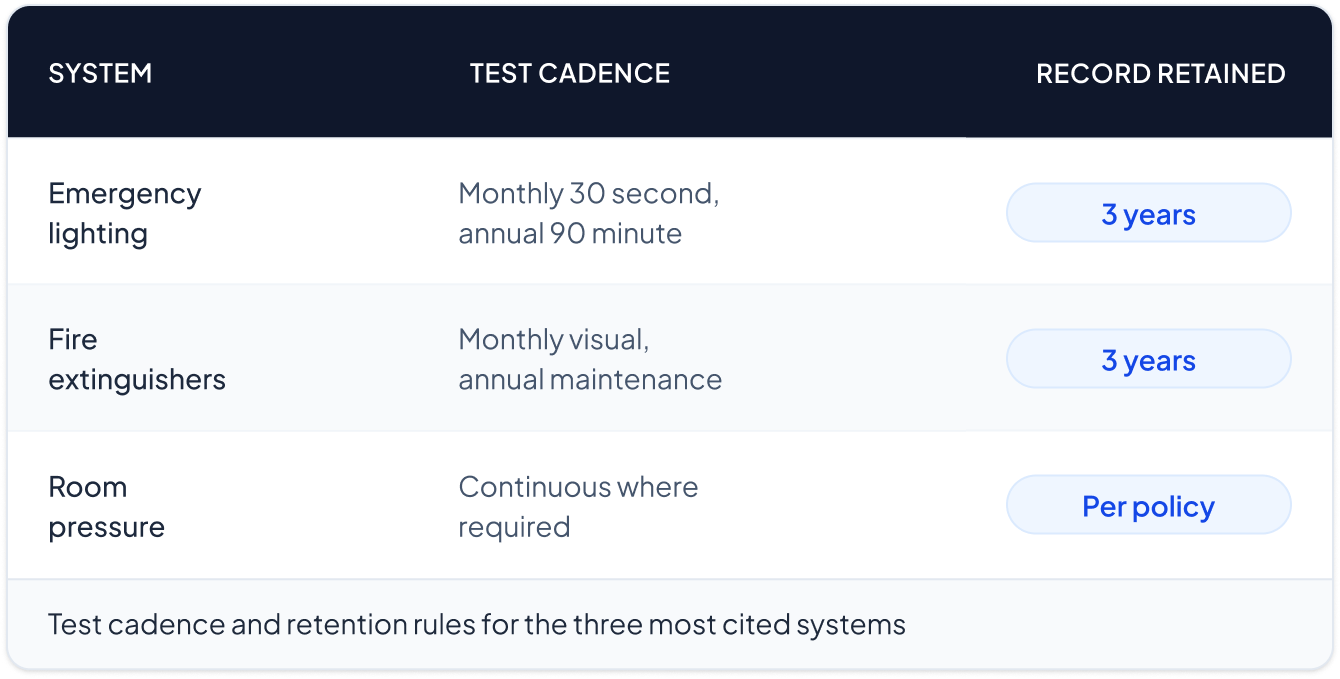
The six systems inspectors check
Most findings cluster in a predictable set of systems. Working through them in order gives a facilities team a defensible position before the surveyor arrives, and it sets the scope for any monitoring rollout.
Emergency lighting
The monthly function test is quick. The annual 90 minute test is the one that gets skipped, and it is the one that generates findings, because it needs a person present at the end of the window to confirm the fixture held.
The rest of the article continues at this measure. Sixty eight characters per line, 19px type, and 1.72 line height give a comfortable reading rhythm for a 2,500 word compliance guide.
Fire extinguishers
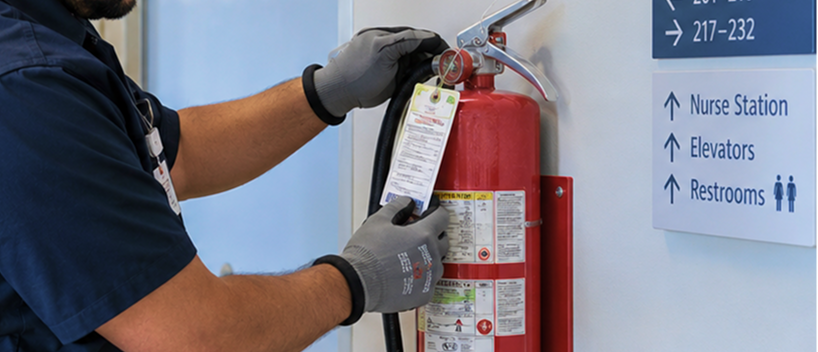
Monthly visual checks catch physical damage and pressure gauge drops. Annual maintenance goes deeper and requires a certified technician to tag the unit. Both records need to exist and be retrievable; one without the other leaves a documentation gap.
Room pressure
Airborne infection isolation rooms and protective environment rooms require continuous differential pressure monitoring where mandated. The record requirement is per facility policy, but surveyors expect to see evidence of trending, not just point-in-time readings.

Where Hexmodal fits
Hexmodal emergency lights run the 30 second and 90 minute tests on schedule, log the result with a timestamp, and raise a work order in your CMMS when a fixture fails, so the annual test no longer needs a technician standing in a corridor with a stopwatch.

Dana Whitfield
Author
Life Safety Compliance Lead, Hexmodal

One or two lines on the writer's hands-on experience with AHJ surveys, linking to an author archive page that lists everything they have published.






Schedule Your Demo
Demo request received
Someone from the team will be in touch shortly to schedule your demo.
Something Went Wrong
Your request couldn’t be submitted. Please try again or refresh the page.
General Inquiry
Thanks for getting in touch.
We’ve received your message and will get back to you shortly.
Something Went Wrong
Your request couldn’t be submitted. Please try again or refresh the page.